Bushland and Heath Plants
Native plants grouped by growth form — from canopy trees to tiny ground orchids — all found in the bushland and heath habitats of the Tomaree Peninsula.
This section organises species by what kind of plant they are rather than by genus or habitat. Browse trees, shrubs, wildflowers, climbers, ferns, and monocots, with wildflowers further divided by flower structure for easier identification in the field.
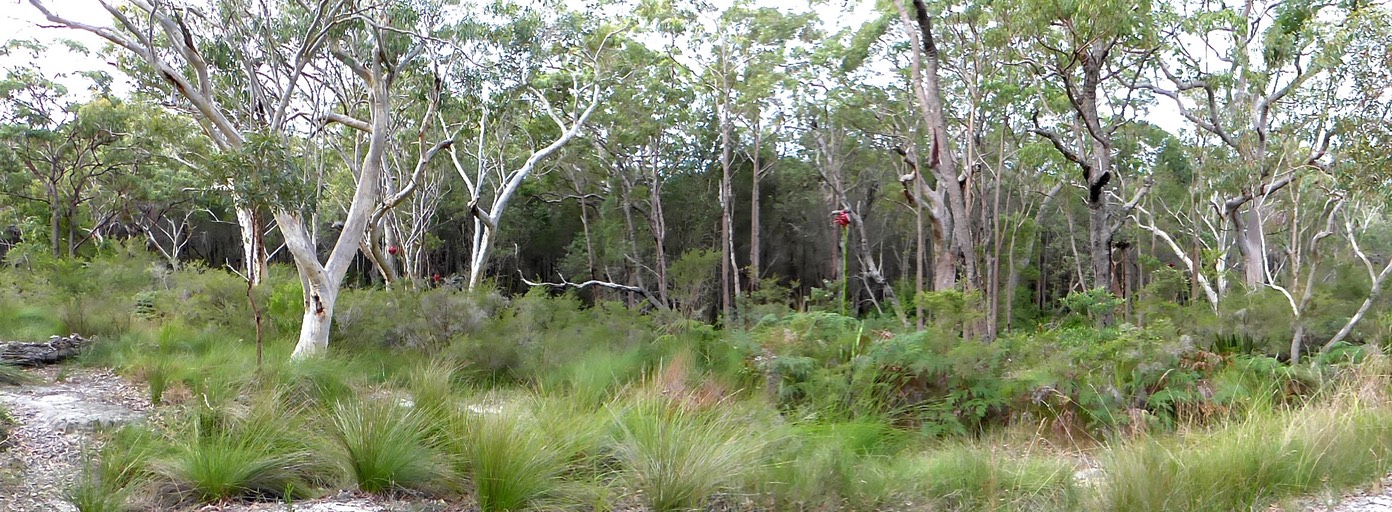
Growth-Form Groups
Each subgroup below contains photographed species typical of dry sclerophyll bushland and coastal heath on the peninsula.
Trees
Canopy and sub-canopy eucalypts, angophoras, allocasuarinas, and other tree species forming the structural overstorey of local bushland.
Small Trees & Large Shrubs
Woody plants that reach small-tree stature or form the tall shrub layer, including banksias, hakeas, and acacias common in heath and woodland understorey.
Wildflowers
The largest subgroup, organised by flower type to aid identification:
- Pea flowers — Fabaceae subfamily Faboideae (e.g. Hovea, Pultenaea, Dillwynia)
- Tubular flowers — species with fused-petal corollas (e.g. Epacris, Styphelia)
- Staminal cluster — flowers where stamens form a prominent central group (e.g. Melaleuca, Callistemon)
- Radial symmetry — flowers with multiple planes of symmetry
- Lateral symmetry — bilaterally symmetrical blooms (e.g. Goodenia, Lobelia)
- Proteaceae — the distinctive flower heads of Banksia, Grevillea, Hakea, Isopogon, Conospermum, and relatives
- Monocot wildflowers — including terrestrial orchids (Thelymitra, Diuris, Caladenia) and other lily-like blooms
Other Shrubs
Woody shrubs not covered in the wildflower or large-shrub categories, including many understorey species.
Other Small Plants
Low-growing herbaceous plants, groundcovers, and sub-shrubs that do not fit neatly into the wildflower groupings above.
Mistletoes
Native hemiparasitic mistletoes (Loranthaceae) found on host trees across the peninsula's bushland.
Climbers & Scramblers
Vines and scrambling plants of bushland and heath, distinct from the rainforest climbers listed under the Rainforest vegetation type.
Non-Flowering Plants
Ferns, fern allies, and other spore-producing plants occurring in bushland and heath environments.
Other Monocots
Grasses, rushes, sedges, and remaining monocotyledons not treated as wildflowers:
- Rushes and sedges — Juncus, Lepidosperma, Gahnia, and related genera
- Grasses — native Poaceae species of open bushland and heath
- Remaining monocots — Dianella, Lomandra, Patersonia, and other non-woody monocots
Related Sections
Plants found in bushland and heath may also appear in other vegetation-type groupings. See also:
- Vegetation Types — overview of all habitat groupings
- Rainforest Plants — species of wetter closed-forest environments
- Wetland Plants — species of swamps, creeks, and damp heath
- Introduced Species — non-native plants also found in bushland areas
For authoritative botanical descriptions and distribution data, visit PlantNET (Royal Botanic Gardens Sydney).
Organising native plants by growth form offers a practical way to explore the vegetation of the Tomaree Peninsula. Rather than working through genera alphabetically or by habitat alone, grouping species by whether they are trees, shrubs, climbers, or groundcovers allows visitors to build a mental picture of the landscape as they encounter it. The canopy is shaped by eucalyptus and allocasuarina species, while the understorey layers with acacia, banksia, and hakea shrubs. This structural approach mirrors how botanists and field guides traditionally present local flora, making it easier to compare similar-looking plants side by side and to recognise the distinctive silhouette each species contributes to the bushland.
The wildflower section is further divided by flower structure, which proves especially useful for identification in the field. Plants with pea-shaped blooms, such as pultenaea, bossiaea, dillwynia, and gompholobium, share a recognisable form that sets them apart from the star-like flowers of hibbertia or the tubular blossoms of epacris and leucopogon. Orchids including pterostylis, caladenia, calochilus, and thelymitra are treated separately, as are the sundews of the genus drosera and the trigger plants. This sub-division acknowledges that casual observers often notice flower shape before any other feature, and it rewards careful looking with quicker, more confident identifications.
Climbers and twiners add a vertical dimension to the plant list, with species such as clematis, kennedia, hardenbergia violacea, and billardiera weaving through trees and shrubs. Ferns and monocots occupy their own categories, bringing in the grasses, sedges, and strap-leaved plants that carpet the forest floor and fill damp hollows. Genera like lomandra, dianella, carex, cyperus, gahnia, and the various rush and sedge species are gathered together here, alongside ferns that thrive in sheltered gullies. Presenting these groups separately acknowledges the different ecological roles they play and helps visitors understand the layering of plant life from the tallest canopy down to the smallest groundcover.
The heath and bushland habitats of the peninsula support a remarkable diversity of growth forms within a relatively compact area. Low shrubs such as epacris, dillwynia, and leucopogon dominate exposed heath, while taller woodland develops where soils are deeper and more sheltered. Grouping plants by form also highlights how different species solve the same environmental challenges in different ways, from the fine, needle-like leaves of leptospermum and callistemon to the broad foliage of rainforest trees like pittosporum, notelaea, and polyscias. Whether you are a seasoned botanist or a weekend walker, this structural catalogue offers a clear pathway into understanding the peninsula's native vegetation.